Thursday, April 25, 2019

New Program Offers A Space For Non-Binary Mitzvahs

Original post: LINK
Written by: Simone Somekh

During middle school, Yoni Kollin took part in “Shevet,” a Jewish teen group in Los Angeles for boys post-bar mitzvah. The program, facilitated by Moving Traditions, a Jewish organization that provides progressive educational teen programming, offered a parallel program for girls, too, called “Rosh Hodesh.”

Yet for Kollin, neither program was a perfect fit.

Kollin, who is now 18 years old and a senior in a high school on the Westside, identifies as non-binary and goes by the pronoun “they.” After coming out, Kollin thought it would have been great if the organization had an LGBTQ-oriented variation of its programming.

“They had it for guys and for girls,” they said. “What about the LGBT teens?”

Last year in October, Kollin’s wish came true when Moving Traditions partnered with another organization, JQ International, to start a new monthly social and educational program for LGBTQ Jewish teenagers in L.A.

Every month, the participants gather to learn and discuss self-discovery, Judaism, gender, identity, and similar topics. The organizers named the group “Tzelem,” which means “image” in Hebrew. Moving Traditions had already been running a few online Tzelem groups for transgender, nonbinary, gender fluid, and gender questioning teens, but this was the first in-person program of its kind.

Kollin said the Tzelem group is “an extra safe space.”

“I was part of JQ, which was already a safe space for me,” Kollin said. “This group is more deep and personal. I’ve been able to open up about deeper, more emotional issues. Everybody who goes [to Tzelem], we all support each other.”

The group leader, Jodi Wedeen guides the teenagers through a different topic every month, such as healthy relationships and pushing against gender stereotypes. Her goal, she said, is to provide the participants with a safe space where they can “talk about uncomfortable issues for a couple of hours.”

Wedeen studied anthropology and sociology. She loves people, she said, and she loves to understand different people and their respective languages.

“I love Jodi so much,” Kollin said. “She’s like a cool aunt.”

JQ International was founded in 2004 to serve the Los Angeles area; it runs, among others, a teen program named “Teen Jewish Queer Straight Alliance (JQSA).” Moving Traditions, on the other hand, operates on a national scale to provide progressive educational programming for kids after their bar and bat mitzvahs, partnering with hundreds of Jewish institutions across North America. “JQ is not our traditional partner,” said Alisha Pedowitz, the California director of Moving Traditions. “Usually we work with synagogues.”

In its nation-wide programming, Moving Traditions has always welcome LGBTQ participants. The decision to start a group specifically targeted to queer teenagers, however, was part of the organization’s “goal of meeting teens where they are at,” Pedowitz explained. “We realized that our two organizations shared many of the same goals for supporting teens to feel like they are flourishing as whole, healthy, unique individuals,” she said.

Pedowitz said that both organizations work for “the broader Jewish community, not for a specific denomination.”


“It’s harder to get into some denominations when it comes to the LGBTQ community,” said Arya Marvazy, managing director of the L.A.-based JQ. “We’ve reached out to the Orthodox community.”

The gatherings take place at the JQ headquarters in West Hollywood. So far, only a few students have joined, but the organizers are aiming to gather up to ten teenagers for next year. Moving Traditions has been in charge of creating the curriculum, which the two directors said is based “heavily on research,” and on “Jewish wisdom as a source of strength to help the teenagers navigate the complexities of adolescence.”

“Teenagers get messages from society on a daily basis on how they should act and how they should be in terms of gender,” Pedowitz said. “We want to be able to push that. We want the teenagers to be themselves.”

Wedeen, the group leader, said she guides the group to discuss the identity of being both Jewish and queer. “We talk a lot about self-love and understanding,” she said. “Even though we have access to all of this technology and information, there is still an internal struggle.”

Most of the families of the participants, Wedeen said, are supportive of their kids taking part in the program. “It can be a little scary for the parents sometimes,” she said. “I’m really grateful to be one of the first people to do this—I get to give these teens a safe space where they can be themselves, without worrying of what other people will think.” “Moving into the next year, the goal is to grow the size of the group,” said Marvazy. “This experience could find its home also in New York City and in other places in the United States. The rest of the Jewish world could learn from this.”

Simone Somekh is a New York-based author and journalist. He’s lived and worked in Italy, Israel, and the United States. Follow him on Twitter @simonesomekh.

This story "A New Program Offers A Space For Non-Binary Mitzvahs" was written by Simone Somekh.

Read more: https://forward.com/life/422591/lgbtq-non-binary-mitzvahs/

www.SunServe.org | (954) 764-5150 | info@sunserve.org | Social Media Admin

Monday, April 22, 2019

Supreme Court will take up LGBT employee discrimination cases next term!


The Supreme Court agreed Monday to consider whether a federal employment discrimination law that bans discrimination based on sex also encompasses discrimination based on sexual orientation or gender identification.

Lower courts have split on the issue that is of critical importance to LGBT rights supporters who are seeking broadened protections. The Trump administration has said that Title VII of the Civil Rights Act does not provide such protections.


www.SunServe.org | (954) 764-5150 | info@sunserve.org | Social Media Admin

Saturday, April 20, 2019

Charlize Theron announced that her 7-year-old is transgender

Original post: LINK
Written by: Alex Bollinger

Actress Charlize Theron said that her older daughter is transgender.

Jackson, 7, was assigned male at birth.

“Yes, I thought she was a boy, too,” Theron, 43, told the Daily Mail. “Until she looked at me when she was three years old and said, ‘I am not a boy!'”

“So there you go! I have two beautiful daughters who, just like any parent, I want to protect and I want to see thrive.”

Theron said that she accepts her daughter.

“They were born who they are and exactly where in the world both of them get to find themselves as they grow up, and who they want to be, is not for me to decide. My job as a parent is to celebrate them and to love them and to make sure that they have everything they need in order to be what they want to be.”

“And I will do everything in my power for my kids to have that right and to be protected within that.”

Theron has starred in a long list of major Hollywood productions, and she won an Academy Award for her work in the 2004 film Monster.

She has stood up for LGBTQ rights in the past. In 2009, she said that she would not marry her boyfriend Stuart Townsend because marriage equality wasn’t legal yet.

“I don’t want to get married because right now the institution of marriage feels very one-sided, and I want to live in a country where we all have equal rights,” she said.

“I think it would be exactly the same if we were married, but for me to go through that kind of ceremony, because I have so many friends who are gays and lesbians who would so badly want to get married, that I wouldn’t be able to sleep with myself.”

www.SunServe.org | (954) 764-5150 | info@sunserve.org | Social Media Admin

Morehouse College To Begin Taking Transgender Men Next Year

Original Post: LINK
Written by: Errin Haines Whack


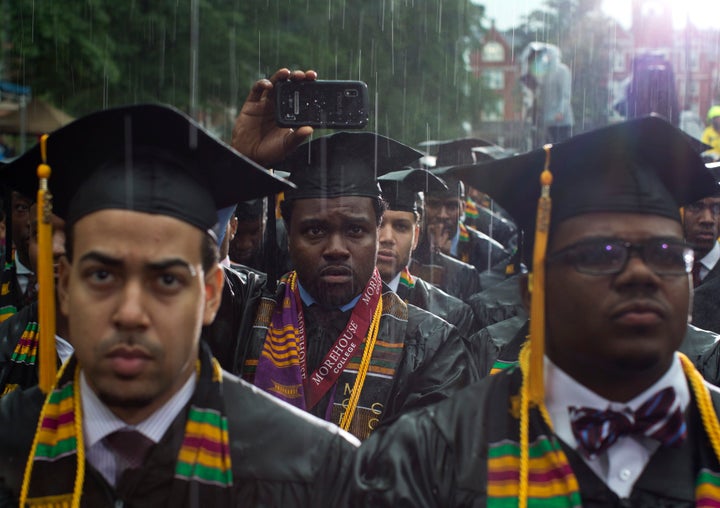
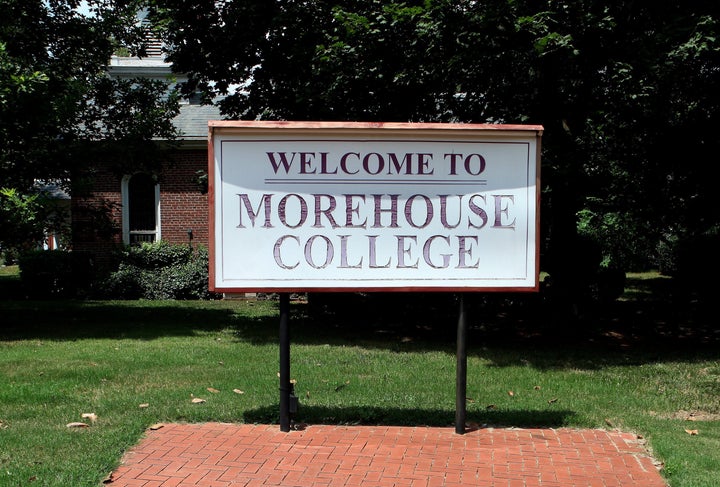
The country’s only all-male historically black college will begin admitting transgender men next year, marking a major shift for the school at a time when higher education institutions around the nation are adopting more welcoming policies toward LGBT students.

Leaders of Morehouse College told The Associated Press that its board of trustees approved the policy on Saturday.

Transgender men will be allowed to enroll in the school for the first time in 2020. Students who identify as women but were born male cannot enroll, however, and anyone who transitions from male to female will not be automatically eligible to receive a degree from the institution.

Morehouse officials hailed the move as an important step toward a more inclusive campus while affirming its mission to educate and develop men.


“I think Morehouse having the courage to speak to issues of masculinity in today’s environment is important,” Morehouse College President David Thomas told The Associated Press. “For 152 years, the world has, in some way, seen Morehouse as the West Point of black male development.”

The policy also states that Morehouse “will continue to use masculine pronouns” which it calls “the language of brotherhood.”

Morehouse is an iconic college that counts the Rev. Martin Luther King Jr., filmmaker Spike Lee and former Atlanta Mayor Maynard Jackson as its alumni. It bills itself as the “college of choice for black men” that has instilled leadership skills in generations of African American men.

More than 1,000 colleges and universities nationwide have adopted some form of a transgender policy, including about two dozen historically black colleges. An increasing number of schools are updating admissions guidelines to ensure transgender students have a welcoming experience, said Human Rights Campaign spokeswoman Sarah McBride.

“Young people are incredibly supportive of LGBT equality, including transgender equality,” McBride said. “Schools are responding in kind. In many ways, our college campuses look like the country we’ll have in 10 or 15 years. There are a lot of reasons for hope.”

Morehouse becomes the first standalone all-male college in the country to adopt a transgender policy. Nationwide, there are only two other all-male colleges, Wabash College in Indiana and Hampden-Sydney College in Virginia. Minnesota’s St. John’s University, which enrolls only men but shares a co-ed academic program with the College of St. Benedict, also has a transgender policy.

Morehouse has had challenges around LGBT issues, most notably the 2002 attack of a 19-year-old student accused of beating a fellow student with a baseball bat who he mistakenly thought was making a sexual advance.

Gregory Love’s skull was fractured in the beating. Aaron Price was found guilty of assault and initially sentenced to 10 years in prison.

The incident was widely seen as reflective of a larger and pervasive attitude toward the LGBT community among African Americans.

Thomas acknowledged that historically black colleges and universities — mainly established after the Civil War with the help of religious institutions like the Baptist and Methodist churches — face added challenges in addressing issues of gender and sexuality because of opposition in black churches.

“I can’t speak for all HBCUs, but we know in the black church there has largely been silence on this issue,” Thomas said. “I can imagine there may be people who would say, ‘Why would you even raise this?’ I say to those people we live in an era now where silence on these issues is actually not helpful. For us, as a school for men, it’s important for us to set clear expectations about what that means. That’s what we’re trying to do with this policy.”

In 2009, the college updated its dress code, in part to address a handful of students who were wearing women’s clothing on campus. The following year, Morehouse held its first Gay Pride. Morehouse offered its first LGBT course in 2013 and has a scholars program named for civil and gay rights icon Bayard Rustin.

Spelman College, an all-woman HBCU next door to Morehouse, adopted a transgender policy in 2017, and the first transgender woman graduated in 2018.

Other HBCUs with transgender policies include Tuskegee University, Howard University, Florida A&M University, Southern University in Louisiana, North Carolina Central University and Morgan State University in Maryland.

Titi Naomi Tukes — a 2017 graduate of Morehouse who enrolled as a cisgender man in 2013 but now identifies as transgender nonbinary and uses the pronouns they/them/their — said they disapproved of the policy, which they learned about in an alumni email on Saturday. Tukes said the policy is hostile and exclusionary toward transgender women and nonbinary students, and could put transitioning students in an unsafe environment if they have to leave the college.

Titi Naomi Tukes — a 2017 graduate of Morehouse who enrolled as a cisgender man in 2013 but now identifies as transgender nonbinary and uses the pronouns they/them/their — said they disapproved of the policy, which they learned about in an alumni email on Saturday. Tukes said the policy is hostile and exclusionary toward transgender women and nonbinary students, and could put transitioning students in an unsafe environment if they have to leave the college.

“You can’t control how someone feels in their body,” said Tukes, now a management consultant working in New York who added they are willing to offer input on how the policy is implemented. “The college fails at addressing and understanding the gender journey that one undergoes during their college experience, spiritually, emotionally, physically and psychologically.”

___

Whack is The Associated Press’ national writer on race and ethnicity. Follow her work on Twitter at http://www.twitter.com/emarvelous.


www.SunServe.org | (954) 764-5150 | info@sunserve.org | Social Media Admin

Friday, April 19, 2019

Second NY Venue Refuses to Host Homophobe Bolsonaro

Original post:  PINK NEWS
Written by: Eve Hartley

A second New York venue is refusing to host homophobic Brazilian president Jair Bolsonaro, days after the American Museum of Natural History declined.
Cipriani Hall in Wall Street declined the opportunity host the Brazilian-American Chamber of Commerce gala where Bolsonaro is set to be named Person of the Year, according to reports from Brazilian newspaper Estadão.

The decision was made due to pressure from environmental activists and from the city’s mayor, Bill de Blasio.

Mayor Blasio came out strongly against Bolsonaro, describing him as a “dangerous man” who “will have a devastating impact on the future of our planet.”
The Brazilian president, 64, has suggested he would pull Brazil out of the Paris Accord on climate change and has said he wants to develop on the Amazon rainforest.
On April 15, the American Museum of Natural History cancelled the event after expressing concern over the booking.
“With mutual respect for the work & goals of our individual organizations, we jointly agreed that the Museum is not the optimal location for the Brazilian-Am. Chamber of Commerce gala dinner,” the museum said on its official Twitter account.

Bolsonaro’s anti-LGBT comments

Ultra-conservative president Bolsonaro has previously said he would rather his son die than be gay. “I would be incapable of loving a gay son. I prefer that he die in an accident.”
While during his presidential campaign, the president of Brazil stood by a claim that he would punch gay people if he saw them kissing in public.
Bolsonaro has also claimed that gay people want to turn children gay “to satisfy their sexuality in the future.” Bolsonaro said: “I make a connection between homosexuality and pedophilia because many of the children who will be adopted by ‘gay’ couples will be abused by these homosexual couples.”
He’s also said: “If a gay couple came to live in my building, my property will lose value. If they walk around holding hands, kissing, it will lose value.”


www.SunServe.org | (954) 764-5150 | info@sunserve.org | Social Media Admin

Thursday, April 18, 2019

Flying While Trans (opinion)


Original post: LINK
Written by: Alex Marzano-Lesnevich


Flying while transgender — a term that increasingly includes not just those who are male or female but also those who identify as both or neither, like me — is undeniably improving. Last month, United Airlines expanded its gender options: Passengers can select male, female, undisclosed or unspecified, and can choose the honorific “Mx.” “Fly how you identify,” the airline touted in its feel-good tweet — and American Airlines, Southwest Airlines, Delta Air Lines and Alaska Airlines quickly promised they’d make similar changes.
But it’s not actually possible to “fly as you identify” as long as the Transportation Security Administration screening process relies on the idea of binary gender. As the T.S.A.’s own guidelines state, “When you enter the imaging portal, the T.S.A. agent presses a button designating a gender (male/female) based on how you present yourself” — that is, how the agent perceives you as presenting yourself. This selection triggers expectations that guide the screening process. If, for example, an agent presses the pink “female” button for someone wearing boxers, an alarm will be triggered on the scanner, because loose fabric around the crotch of a female body is considered unexpectedly gender nonconforming. A compression shirt on the chest of someone for whom an agent presses the blue “male” button can do the same.
Once gender has been chosen, the machine proceeds on expectations about anatomy. A transgender passenger who passes — who is correctly read by the T.S.A. agent as the gender the person identifies as — but who has different genitalia will trigger an alarm. Intersex people may have ambiguous genitalia that trigger alarms and require invasive pat-downs every time.
In 2015, when Shadi Petosky’s horrific experience gave rise to the hashtag #travelingwhiletrans, the T.S.A. still classified the genitalia of transgender people as “anomalies.” After the outcry, they now use the new language of “alarm.” Current T.S.A. guidelines state that “agents are trained to clear the alarm, not the individual.” But when identity and body cause the alarm, what’s the distinction?

I identify as genderqueer. Last week, I had just stepped through the scanner at Boston Logan International Airport when I heard the T.S.A. agent shout, “I think we pressed the wrong button!” He had shouted so loudly, I assumed he was talking about someone else. But then he spoke again, directly to me, avoiding my gaze. “Go through again,” he said.
The long line behind me halted as I walked back into the scanner and assumed the position: arms up, legs spread. I waited, painfully aware that the others passengers were staring at me. Did they know what was happening? Did they know what the agent meant by “the button?”
My hair is clipped to a fade. My shoulders have started to thicken from barbell presses. Even without a binder, my chest is flat. I am often called “sir,” particularly in airports, particularly when I wear the men’s blazer that I have learned differs in some inscrutably minute way from all the other men’s blazers I wear, and makes people read me differently.
But I am more often called “ma’am.” I have a soft jawline and curved hips. Which button had they pressed this time? And what had then caused the agent to reclassify me, rethink me, re-sort me into the other category? The other category — when neither category actually fits?
My cisgender friends did not know that T.S.A. agents judged their bodies and presentation every time they flew. They’ve never had to know. But among my gender-nonconforming and transgender friends, experiences like mine are common. In 2015, a survey of transgender passengers revealed that 43 percent had negative experiences with T.S.A. screening in the previous year.

A 2017 analysis in the American Journal of Public Health estimated that there are close to one million transgender individuals nationwide. The analysis suggested what many of us in the transgender community already know: that as young people become more comfortable with trusting their own self-expression and bodies rather than a socially constructed and enforced idea of a strict binary, the number of transgender people in society will grow.
The T.S.A. must catch up. So far, it has refused to articulate why gender selection at the start of screening is necessary. More than a year has passed since the T.S.A. acting administrator for civil rights, Christine Griggs, testified before Congress that vendors had machines that could move the T.S.A. away from these binary screenings. The T.S.A. has failed to present a timeline or steps it is taking toward this, even in response to a congressional request. This past August, Representative Kathleen Rice, Democrat of New York, introduced the Screening With Dignity Act, which would give the T.S.A. 180 days to report on the feasibility of adopting gender-neutral scanners. But no vote on the act has been held, and even with a Democratic majority, the composition of the House arguably makes it unlikely.
Meanwhile, passengers like me fly. When the machine had finished its second scan, I stepped out and waited. I found myself looking more closely at my fellow passengers. How would I sort them if I had to? How would they sort me? Did they think I was a man or a woman? Did anyone think I was neither and therefore actually see me?
Then I noticed the agent’s expression shift. He looked as miserable and uncomfortable as I felt. I turned around. On the screen was the outline of a person, arms up, with just one little yellow box of irregularity — the “alarm.”
It was right over my crotch. I shouldn’t need to tell you that the pat-down that followed was invasive and humiliating, just as I shouldn’t have had to endure it.
Alex Marzano-Lesnevich (@alexmlwrites) is the author of “The Fact of a Body: A Murder and a Memoir” and an assistant professor at Bowdoin College.
The Times is committed to publishing a diversity of letters to the editor. We’d like to hear what you think about this or any of our articles. Here are some tips. And here’s our email: letters@nytimes.com.
Follow The New York Times Opinion section on FacebookTwitter (@NYTopinion) and Instagram.


www.SunServe.org | (954) 764-5150 | info@sunserve.org | Social Media Admin

Tuesday, April 16, 2019

How to talk to transgender youth, according to experts and their parents

Original Post: LINK
Written by: Julie Compton

Not all young people follow strict gender norms. Understanding how to talk to trans kids in your family and community can help put everyone at ease.

“Your son is transgender? I never would have known. He looks so much like a boy!”
It’s one of the well-meaning comments San Diego mom Kathie Moehlig heard over and over from strangers after her son, Sam, transitioned from female to male when he was a teenager.
“I’m like, of course he looks like a boy, because he is,” Moehlig tells NBC News BETTER.
Transgender youth and their families are often bombarded with unsolicited comments from strangers, family, and friends related to the teen’s gender identity. These comments range from well-meaning advice to intrusive questions and even accusations of child abuse, according to Diane Ehrensaft, the director of mental health at a gender clinic in San Francisco and the author of “The Gender Creative Child.”
“All of a sudden, because you have a child who says ‘I’m transgender,’ now people look at you funny and wonder ‘Why are you letting your child do that?’” Ehrensaft says.
In the United States, 0.7 percent of youth between ages 13 and 17 identify as transgender, according to a recent report from the Williams Institute UCLA School of Law. More and more of America’s youth are identifying outside the male-female binary: 56 percent of Generation Z kids know someone who uses gender-neutral pronouns, one survey found, and New York City joined four states inallowing gender-neutral birth certificates.
For many people, adjusting to a young person who is transitioning or using new pronouns may seem challenging. Experts who work with these individuals and their families say there are a number of do’s and don’t’s to keep in mind when interacting with these youth and their families. The first step, these experts say, is to not question the young person’s identity.
“Some of the recent literature that’s coming out is demonstrating that all the ills that we have known to be associated with transgender youth and adults as in anxiety, depression, self harm, even suicidal thoughts, drug and alcohol addiction in later life, risky sexual behaviors, go way down when there is social support for a person to be a gender that feels authentic to them,” says Ehrensaft.
Here are some of the most common misconceptions about sex, gender, and gender identity, according to experts and parents interviewed for this story.

MISCONCEPTION #1: SEX AND GENDER ARE THE SAME

People often conflate “gender” with “sex,” but they are not the same, according to Ehrensaft.
Whereas “sex” refers to a person’s reproductive system, “gender” refers to one’s personal sense of oneself as a man or woman, she explains.
“Your gender lies not between your legs but between your ears,” Ehrensaft says.
The term “cisgender” refers to anyone who identifies with the gender assigned to them at birth.

MISCONCEPTION #2: “GENDER DYSPHORIA” IS A MENTAL ILLNESS

“Gender dysphoria” is the distress a person experiences when their gender does not match the sex they were assigned at birth, and is not classified as a mental illness. Nevertheless, Ehrensaft says there is still a perception among some people that it is a disorder.
“There are certain people who think that these are disordered parents with disabled children, and both of them need to be fixed, and that can cause tremendous harm to the parent and child,” she says.

MISCONCEPTION #3: GENDER IDENTITY IS EITHER MALE OR FEMALE

“Transgender” is an umbrella term that refers to anyone who does not identify with the gender they were assigned at birth, according to Melinda Mangin, an associate professor in education at Rutgers University, whose research focuses on trans children in schools.
“Trans” means “across or beyond,” says Mangin.
“So it’s really anyone who cuts across social norms for what it means to be a man or a woman could be considered transgender,” she says.
“Gender identity” is a phrase that refers to one’s personal sense of being a man or a woman.
There are a range of identities that fall outside of “man” and “woman” as well, like “nonbinary.”
Whereas some transgender people may see their gender as binary — meaning they identify as either a man or a woman — those who identify as “nonbinary” may see their gender as more complex, and usually wish to be identified with “they” and “them” pronouns, Mangin explains.
Others may shirk these identities all together, according to Ehrensaft.
“Some kids also will say ‘I’m agender,’ meaning, ‘I don’t have a gender. I think of myself as a human being, I don’t use those categories at all,’” says Ehrensaft.

WHAT TO AVOID WHEN SPEAKING TO TRANS YOUTH AND THEIR FAMILIES

What are some mistakes to avoid when interacting with trans youth and their families? Here are some of the most common, according to parents and experts.

1) OFFERING UNSOLICITED OPINIONS AND ADVICE

Being the parent of a transgender teen can be stressful and isolating, according to Moehlig. Before her son transitioned, she says he was self-harming and talking about suicide.
When Moehlig allowed her son to transition socially at the age of 11, many people told her: “11-year-olds can’t know who they are.”
She says many of these comments were from the parents of cisgender kids who “don’t understand the overwhelm of it.”
“Imagine a 10-year-old saying ‘I don’t see myself living to 16,” Moehlig says.
Parents interviewed for this story say the decision to allow their teenager to transition was not made brashly or easily. Nevertheless, some people tended to assume they hadn’t thought it through, or that they were making the decision for their children.
Ehrensaft says it’s common for people to not only criticize the child’s identity but the parent’s choice to support them.
“It’s a double whammy,” she says, “because you’re also criticizing the parents at the same time who have supported their child in being that person.”

2) ASKING QUESTIONS OR MAKING STATEMENTS THAT OBJECTIFY THE TEEN

Parents are generally open to educating others about their child’s identity, and understand there is a learning curve for most people, according to Mangin. However, people will often ask questions about their child’s private parts, possible medical treatments and surgeries, which objectifies the child, she says.
“Transgender children are not predators, they’re not overtly sexually active, they’re just kids, and if nobody else’s genitals are a topic of conversation, then you probably shouldn’t worry about that one child’s genitals,” Mangin says.
Often, when people find out a child is trans, they suddenly feel it’s ok to ask questions about their bodies, Moehlig says.
The mom recalls: “My kid was 12 when our mailman of all people asked me what was in his pants.”
People also frequently asked her son questions related to surgery and medical treatments.
“You wouldn’t ask somebody else what kind of medical treatment they had,” Moehlig says, “but it seems ok for people to ask my trans son that.”

3) MISGENDERING THE TEEN

When a child is dysphoric, misgendering them over and over can exacerbate their distress, according to Ehrensaft. Whereas some children might simply be annoyed, others can experience extreme anxiety, Ehrensaft says.
Randi, a mother in New Jersey, says her teenager, who identifies as nonbinary and uses “they/them” pronouns, sometimes experiences panic attacks when people refer to them with gendered pronouns. The mother asked her and her’s child’s names be withheld to protect their privacy.
For instance, if a store employee greets her child with “Hello, miss,” the teen will get upset. After hearing comments like these, she says her child believes people will judge them negatively if they look for clothes in the boy’s section.
“For me, as an adult woman, if somebody called me ‘gentleman,’ if somebody said, ‘Sir, can I help you?’ I would correct them, because I’m confident in the fact that I’m a woman,” the mother says, explaining: “My child doesn’t feel empowered to correct them.”
Some adults may think children experiencing distress over pronouns are overreacting, but Ehrensaft says it’s important to look at it from the child’s point of view: Ask yourself how you would feel if people constantly referred to you as the wrong gender everywhere you went, she says.
“That’s how it feels for a lot of these kids,” she says.

HOW TO GET USED TO NEW PRONOUNS

The only way to know for sure if someone is transgender is if they tell you, says Mangin. But if you are unsure how a person identifies, you should ask them what their pronouns are, she says. You might feel uncomfortable doing it, she says, but many people who are trans or gender nonconforming usually see it as a huge sign of respect.
“It sounds really awkward,” she says, “but it’s even more awkward to make a mistake.”
If a teen or someone you know has switched pronouns, you might worry about remembering to get it right, or fear how they will react if you make a mistake. The best thing to do if you are worried is practice, according to Mangin.
“Maybe I’m driving a car and tell a story [to myself] about this person I know practicing the pronouns,” she says. “That way I’m not doing it in a public space or doing it where the stakes might be higher.”
Moehlig says it all comes down to learning to be conscious.
“Our minds like to be filled with all kinds of things,” she says. “We multitask, and breaking that habit when it comes to names and pronouns really does require us to be conscious.”
If you are unsure about someone’s pronouns, she says, you can introduce yourself with your own. This will give the other person space to tell you theirs, she says.
“I say ‘My name is Kathie Moehlig, she/her/hers,’ and move on from there,” she says. “And that opens up a space so that other people then can use their pronouns if they would like to share it.”
Tina Nacrelli, a mother who lives in Jersey City, NJ, is the parent of 12-year-old Esme, who identifies as agender.
Nacrelli says it was difficult for her to get her child’s pronouns right at first.
She says she and Esme created a habit where if she used the wrong pronouns by mistake, Esme would simply reply “ouch.”
“Then I would say ‘oops,’ and then we move on,” she says.
Over time, this helped Nacrelli get used to using the correct pronouns, she says.
“When your attention is drawn to ‘ouch,’ it makes you more cognizant of it, and you’re more likely to get it right the next time,” she says.
If you get someone’s pronouns wrong, the best thing to do is to simply correct yourself and move on. Drawing too much attention to it can embarrass the individual, according to Mangin.
“If you apologize kind of emphatically on and on and on, it suggests that there was something wrong,” she says.

HOW TO HELP KIDS UNDERSTAND TRANSGENDER FRIENDS AND CLASSMATES

Kids who are trans and gender nonconforming experience high rates of bullying at school. According to the 2015 U.S. Transgender Survey, 77 percent of respondents said they were verbally harassed, physically or sexually assaulted as students. A recent report from the American Academy of Pediatrics found that 14 percent of trans adolescents had attempted suicide.
Mangin says it’s important to help kids understand that not all boys and girls follow strict gender norms. She says this can help reduce bullying these students experience.
“We have very strong gendered social norms about what constitutes feminine behavior and what constitutes masculine behavior,” Mangin says.
She says there are ways parents can help kids understand that gender is not always simple for everyone. “I think trying to question social norms and think about that help children think that through,” she says.
For example, asking children questions like, “If it’s ok for girls to wear pants, is it ok for boys to wear a dress?” can help them question stereotypes and understand there are lots of different ways to be a boy or a girl, she explains.
“I think having those conversations is really important, because it’s not just about supporting transgender children,” Mangin says. “Those social norms are really harmful for all children, because they’re limiting. In worse case scenarios, they’re not only limiting, but they give rise to inequity and violence, so it’s really important that all kids get to have those conversations.”
For more on how to talk to trans people and their families, see this guide from GLAAD.


www.SunServe.org | (954) 764-5150 | info@sunserve.org | Social Media Admin

Coming Together for Our Community: A Heartwarming Back-to-School Backpack Drive

As summer begins to wind down and the anticipation of a new school year starts to build, the importance of preparation and support for our c...